Building an AI-native artist through an API pipeline
A fictional producer whose tracks I generated programmatically through the Eleven Music API. The pipeline covered music, voices, sound matching and sequencing, with six albums and 52 tracks on ElevenMusic in 2026.

The hypothesis
Can an artist who does not exist, and whose records are made by API calls, earn a real audience? Cash Nova is a fictional producer (“I’m Cash, producer based in London”) that I created to find out. Generating a single track is the easy part. An album is a property of the whole set: a consistent sound, voices, a running order that flows. The hypothesis was that a pipeline could produce those qualities, and that listeners would respond to the result on its own terms.
What I did
- Built and ran the pipeline that generated the catalogue programmatically through the Eleven Music API (opens in a new tab) from ElevenLabs. No track was made by hand in a web interface.
- Released the output on ElevenMusic under the Cash Nova identity, with its own bio and artwork. On 15 September 2026 the profile showed 52 tracks and six albums, all released in 2026, among them Gold Coast, Burning In The Light, The Last Lie, Remixes and Midnight in Cartagena.
- Treated audience response as the outcome: a dated follower count, plus platform discovery and playlist placement, for which I publish no counts.
I did not build or train the generation model. It is ElevenLabs’ model, reached through their API. My work is the pipeline around it and the catalogue it produced.
Technical stack
The pipeline is built on the ElevenLabs API at api.elevenlabs.io, authenticated with an xi-api-key header. Read from the top, the layers run from planning a release to publishing it. Every endpoint named is a documented one.
| Layer | Component | What it does |
|---|---|---|
| Release planning | POST / | Turns a written brief for a track into a composition plan: global styles, then sections, each with its own styles, length and lines. The plan is data, so it can be read and edited before any audio exists. |
| Generation | POST / | Composes the audio from a plan. The detailed call returns the track’s metadata together with the audio. |
| Spoken parts and voices | POST / | Dialogue renders an exchange between several speakers from a script in which each line names its voice. Text to speech renders a single voice. The voice_id fixes the speaker, so a voice stays the same wherever it appears. |
| Sound matching | Shared style descriptors in the composition plan | The design problem of the project: each generation is independent, so nothing makes two tracks sound like one record. The pipeline approaches it through the plan. A release shares one set of style descriptors, and every track’s plan carries the same limits on tempo, key and instrumentation. |
| Sequencing | Running order across an album | The album is the unit of work. The running order is set across the release, so that tracks made separately flow from one to the next. |
| Artwork and identity | The Cash Nova persona, a cover for each release | One fictional producer with a bio, credits and cover artwork, so listeners meet an artist and not a folder of files. |
| Publishing | ElevenMusic artist profile | Albums and tracks are released to the public profile. The follower count, discovery and playlist placement are read from there. |
How a release moves through it
One brief per album feeds two lanes, music and voices. They meet at sequencing, and the finished release goes to ElevenMusic with its artwork.
Decisions that mattered
- The API, not the web interface
- Every track came from a programmatic call, not from a web interface.
- The album, not the track, as the unit
- Sound matching and sequencing are stages of the pipeline, so coherence across a release is part of the build.
- Voices inside the pipeline
- The voices, spoken parts included, are a stage of the pipeline like the music, so they fall under the same process.
- A named persona
- The catalogue is released under one fictional identity with its own bio and artwork. Listeners meet an artist, and the follower count belongs to that artist.
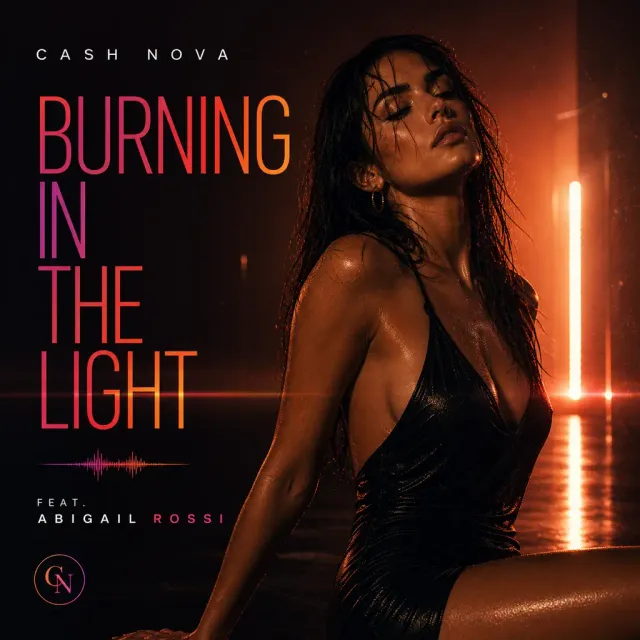
Burning In The Light
Remixes

Midnight in Cartagena
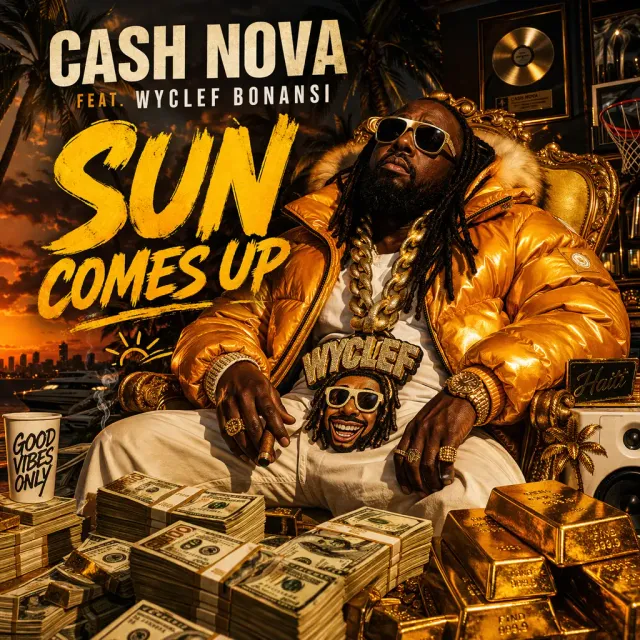
Sun Comes Up (feat. Wyclef Bonansi)
Evidence so far
Read from the public ElevenMusic profile on 15 September 2026. The figures are small, and they measure audience reach.
- 52 tracks
- across six albumsGenerated through the Eleven Music API and released on ElevenMusic in 2026. Output, not audience. Profile on 15 September 2026.
- 97
- followersElevenMusic artist profile on 15 September 2026. Audience reach.
The tracks also received platform discovery and playlist placement; I publish no counts for either. According to my creator analytics the strongest-performing track is “Sun Comes Up” (feat. Wyclef Bonansi), on Gold Coast.
So far the answer to the question is: yes, a small audience. 97 followers and some playlist placement show that listeners found the music. They do not show more than that.
Limitations and status
The figures belong to one platform and are modest. The only audience figure I publish is the follower count, with its date. The model is ElevenLabs’ and I make no claim about it. The pipeline code is not public. The stack above names the endpoints the pipeline is built on and how it approaches coherence across an album. It gives no measurements of how closely the tracks match, because I have none to publish.
What I learned
Single generations are easy to come by. Consistency of sound, voice and order across a release has to be engineered, and that is where the pipeline earns its place. The audience figures are small, and they are the only measure I have of how the catalogue was received.
Where to listen
ElevenMusic offers no public embed, so the music lives there: listen on ElevenMusic (opens in a new tab). Nothing plays on this page. The API the pipeline runs on is documented by ElevenLabs: Eleven Music API (opens in a new tab).